Have you ever wondered why Thai food smells so unforgettable?
Why Tom Yum has that sharp, uplifting aroma.
Why green curry feels deep, warm, and comforting — even before you take a bite.
The secret isn’t hidden in seasoning powders or bottled sauces.
It begins much earlier… right at the roots and leaves.
Welcome to the sensory heart of Thai cuisine.
The Mystery Behind Thai Aromas
Many people think Thai food is all about spice and heat.
But what truly defines Thai cuisine is aroma.
A gentle whiff of crushed galangal.
The citrusy perfume of kaffir lime leaves.
The bright, clean scent of lemongrass freshly snapped in half.
These are not just ingredients.
They are the soul of Thai cooking.
Ginger vs. Galangal: Similar Look, Different World
One of the most common questions we hear in our cooking classes is:
“Is galangal just Thai ginger?”
They may look similar — but they are completely different.
Ginger is warm, spicy, and slightly sweet.
Galangal is sharp, peppery, floral, and almost pine-like.
Using the wrong one can change an entire dish.
The same confusion happens with:
- Lime vs. Kaffir lime
- Basil vs. Thai basil
They may look familiar, but they speak different flavor languages.
Don’t Just Cook — Understand
At Asia Scenic Thai Cooking School, we don’t just teach recipes.
We teach understanding.
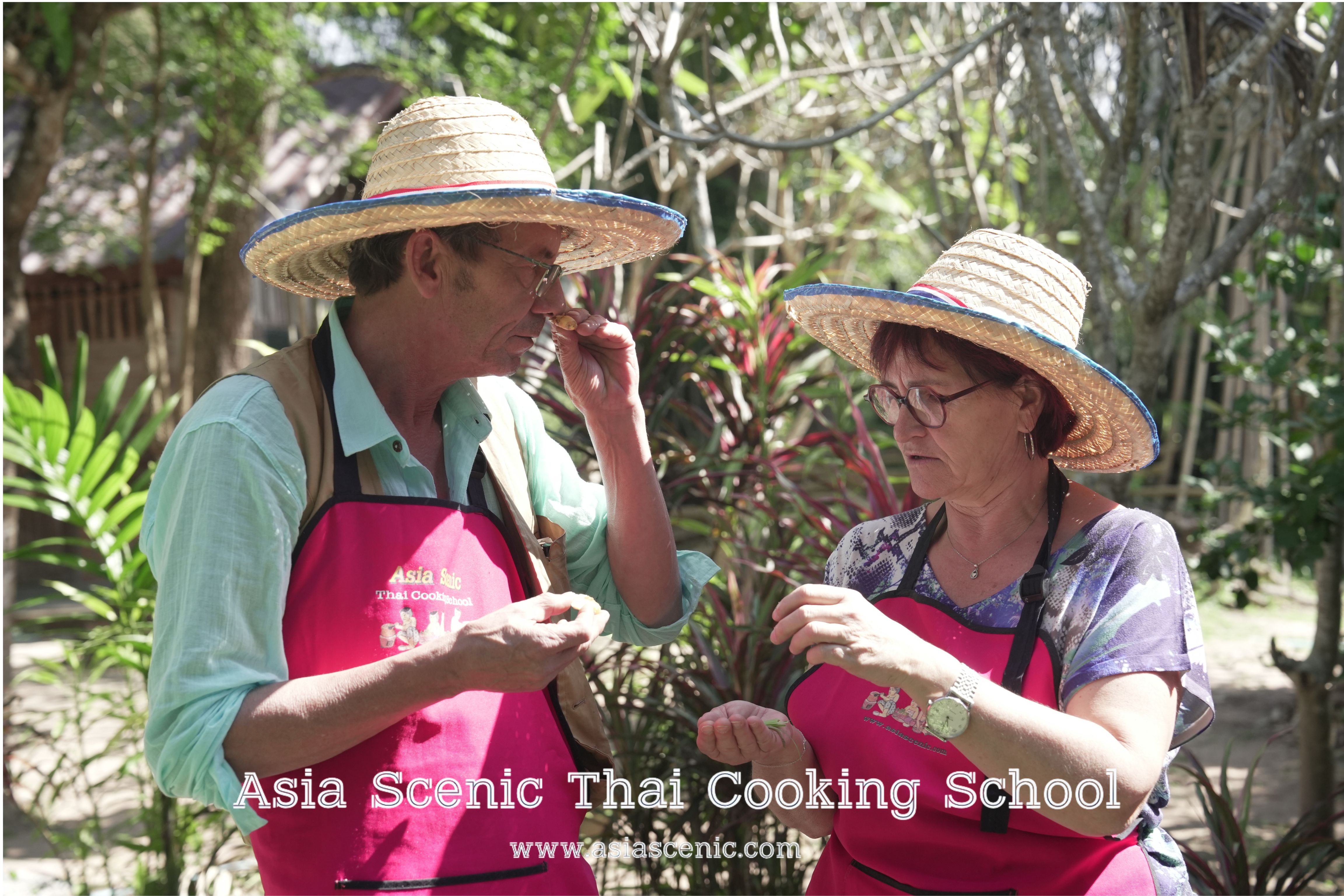
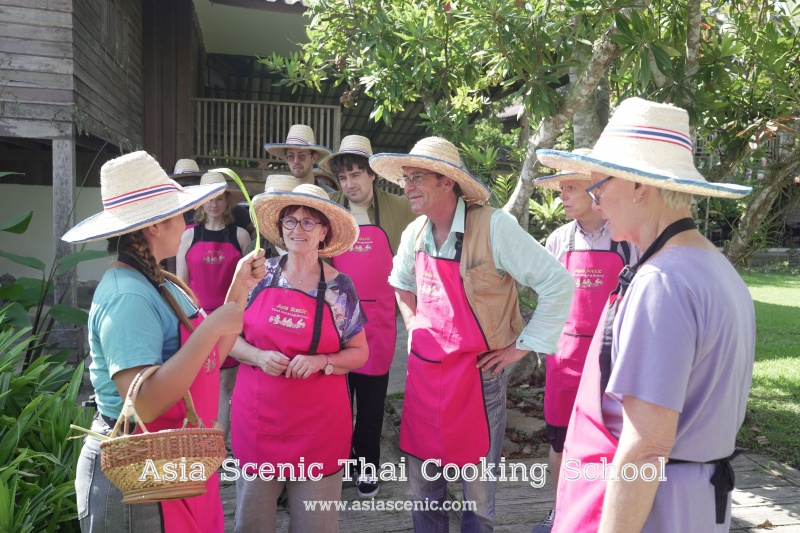
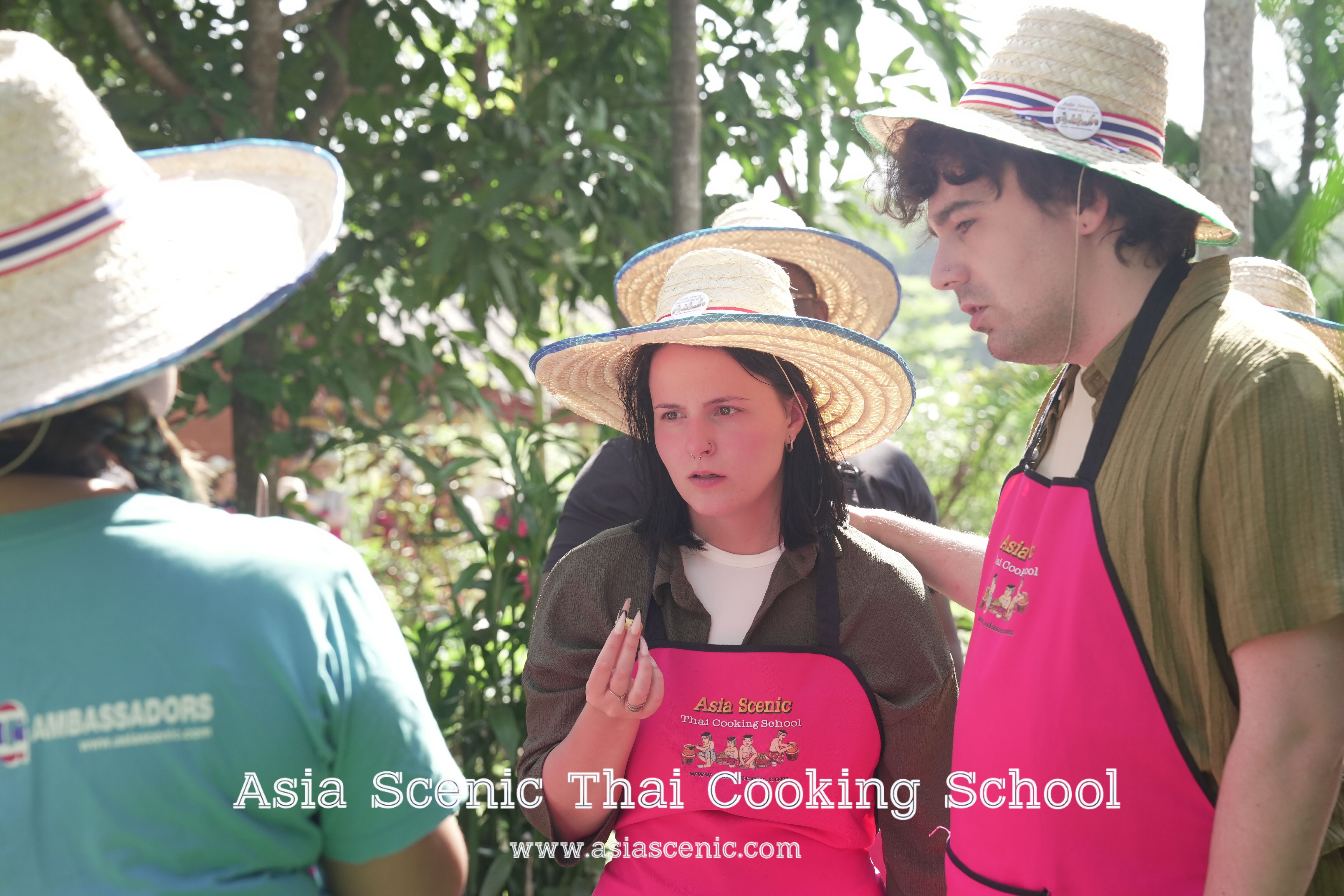
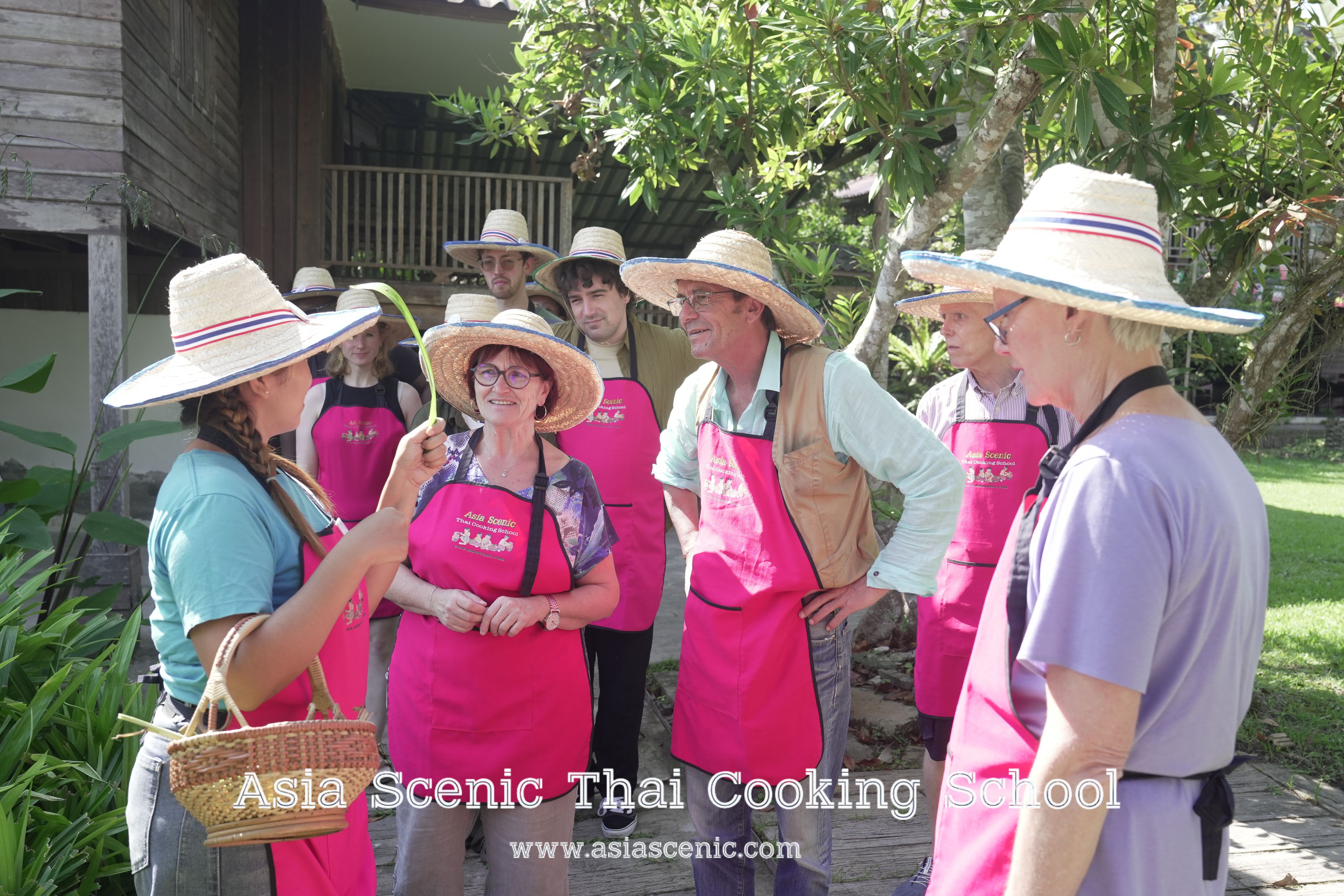
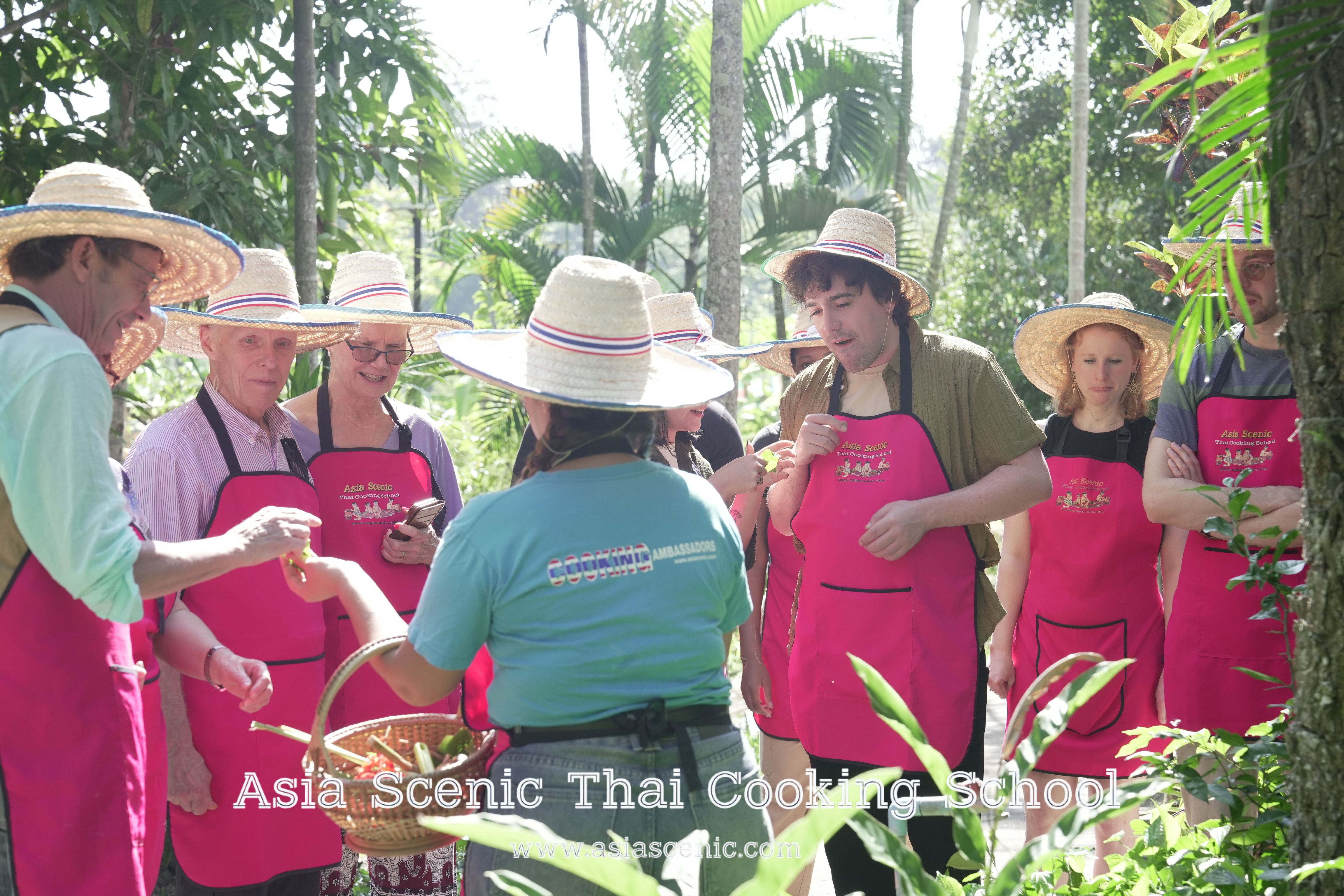
Before chopping or cooking, we invite our students into our organic garden in Chiang Mai.
Here, learning begins with the senses:
- Smell: Crush a leaf, breathe in the aroma
- Touch: Feel the texture of fresh roots and herbs
- See: Notice the color, shape, and freshness
- Taste: Try a tiny bite — raw, honest, real
This is where “aha” moments happen.
Suddenly, ginger and galangal are no longer confusing.
They become unforgettable.
From Garden to Curry Paste
When you learn this way, something changes.
You don’t blindly follow a recipe anymore.
You start to listen to your ingredients.
You know why galangal belongs in curry paste.
You understand why kaffir lime leaves are torn, not chopped.
You cook with confidence — not guesswork.
This is what makes authentic Thai food… authentic.
The Takeaway
By the end of the class, our students leave with more than dishes they cooked.
They leave with:
- Knowledge that stays with them
- Confidence to cook authentic Thai food at home
- A deeper connection to ingredients and culture
You don’t just remember the taste.
You remember the smell of the garden, the sound of leaves being crushed, and the moment everything finally made sense.
Want to Experience This Yourself?
If you believe great food starts with understanding — not shortcuts —
we would love to welcome you.
Join our farm-to-table cooking class in Chiang Mai,
where every dish begins with a walk in the garden
and every flavor has a story.
???? Don’t just eat Thai food. Understand it.
And let your senses guide the way.