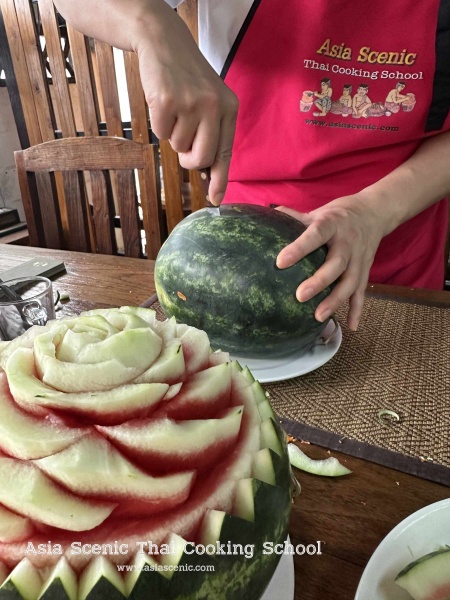
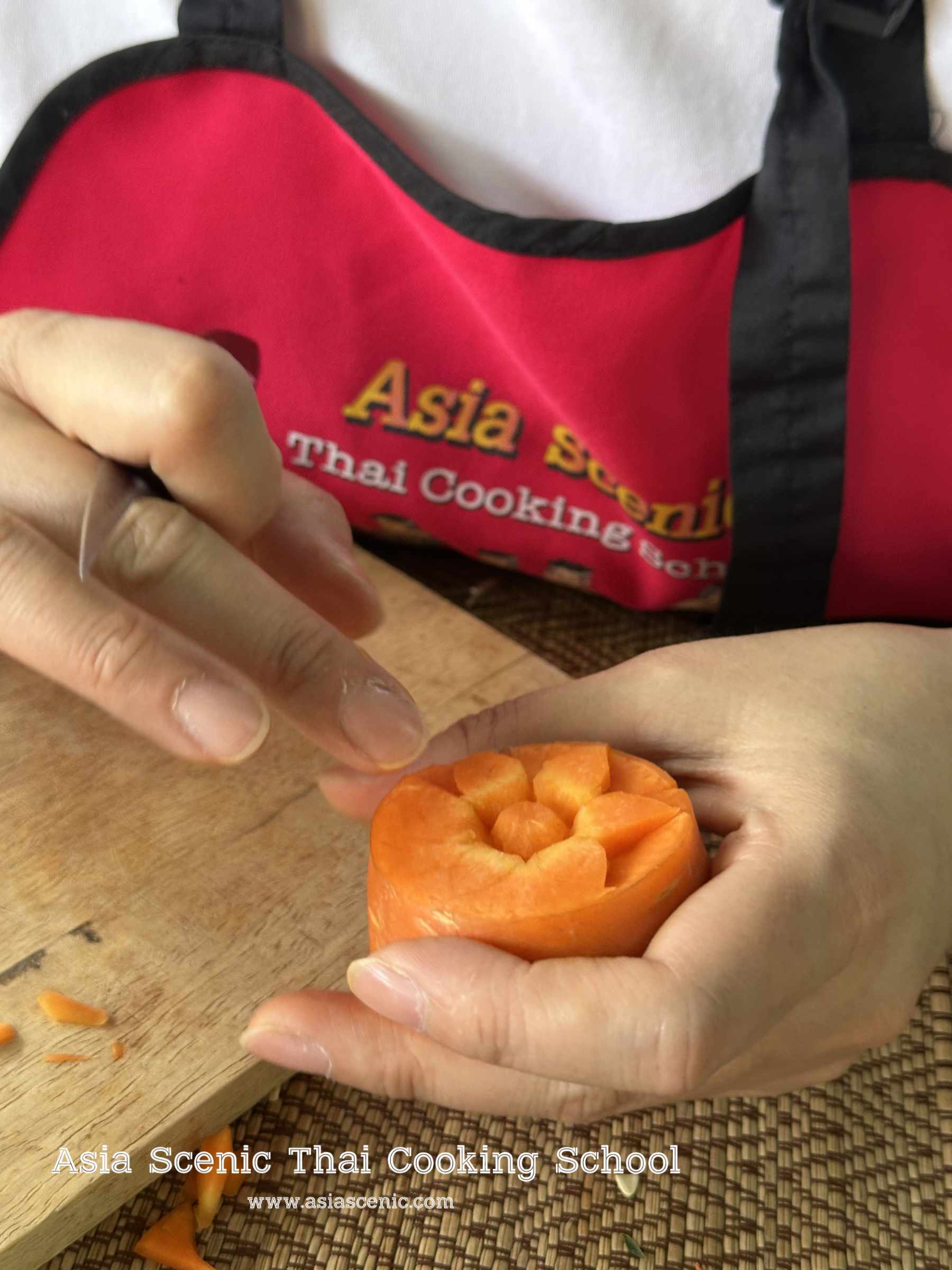
“Why do we carve vegetables?”
This is one of the most common questions we receive
in our Thai cooking classes in Chiang Mai.
At first glance, it may look like decoration.
But in Thai culture, carving means much more.
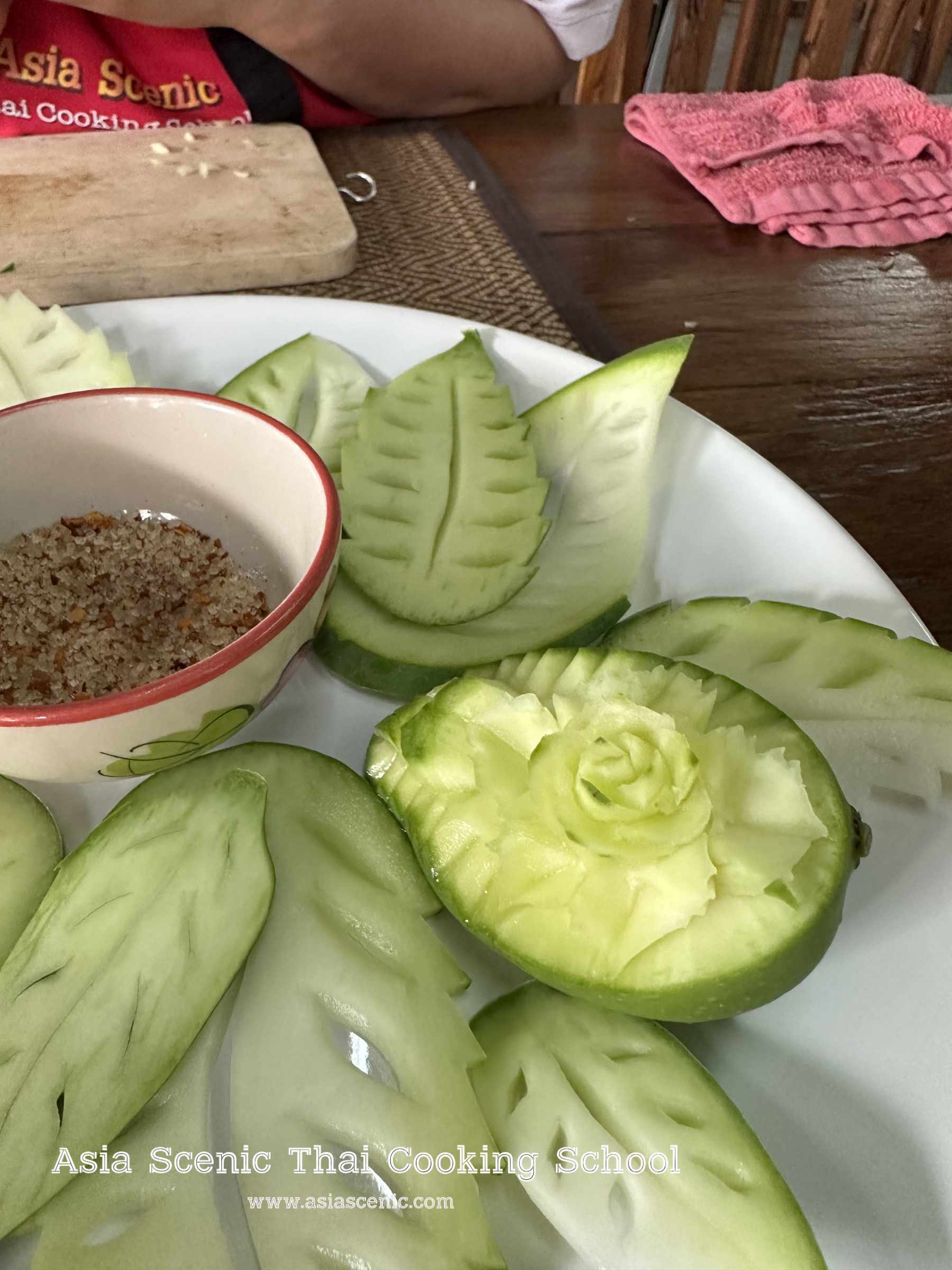
1. Adding Value to Simple Ingredients
In Thailand, presentation is part of the experience.
A simple cucumber becomes elegant.
A carrot becomes a flower.
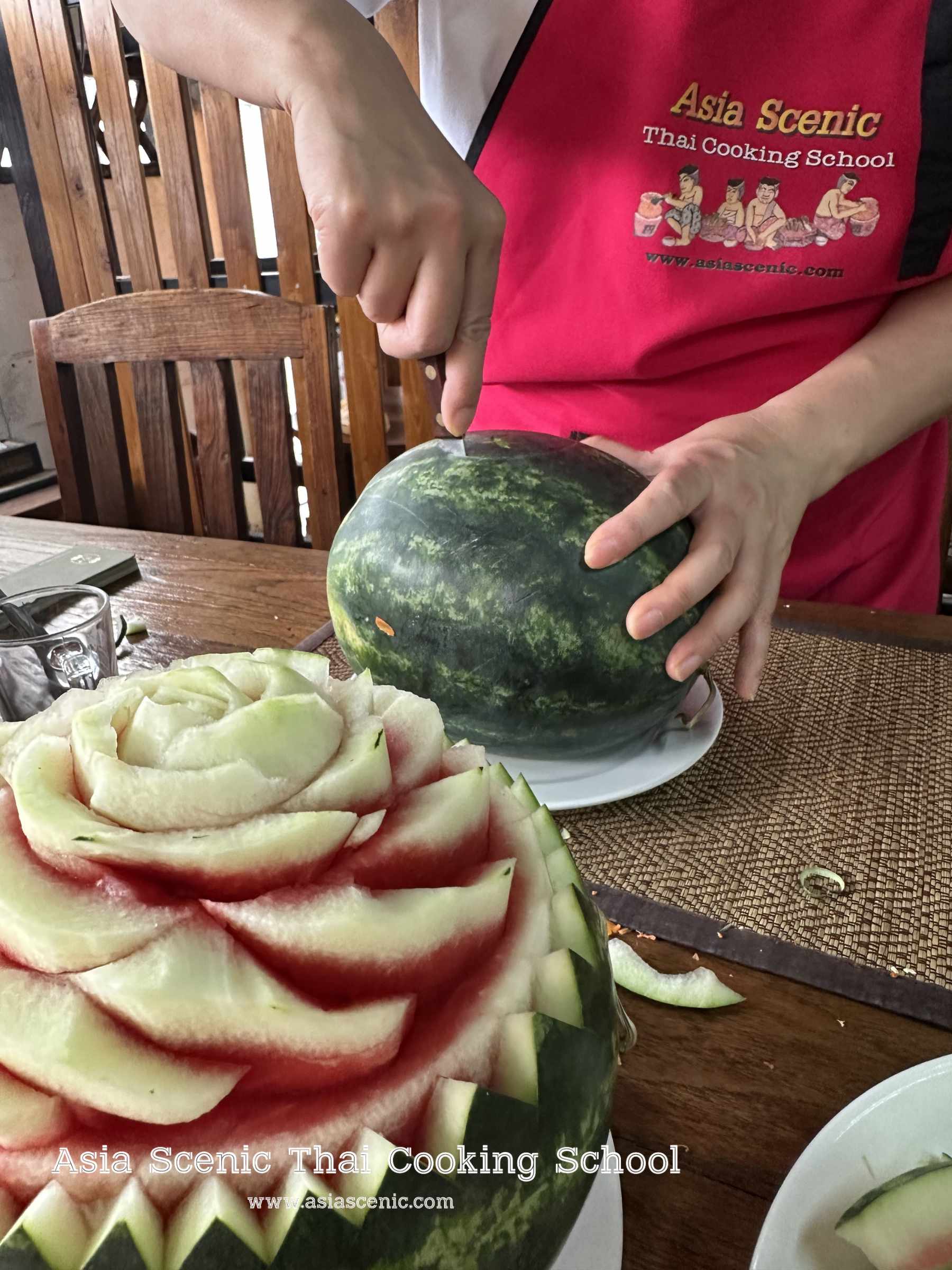
A watermelon becomes a centerpiece.
Carving transforms everyday ingredients into something memorable.
It is not about luxury —
it is about care.
2. Respecting the Ingredients
One important principle we teach at Asia Scenic is:
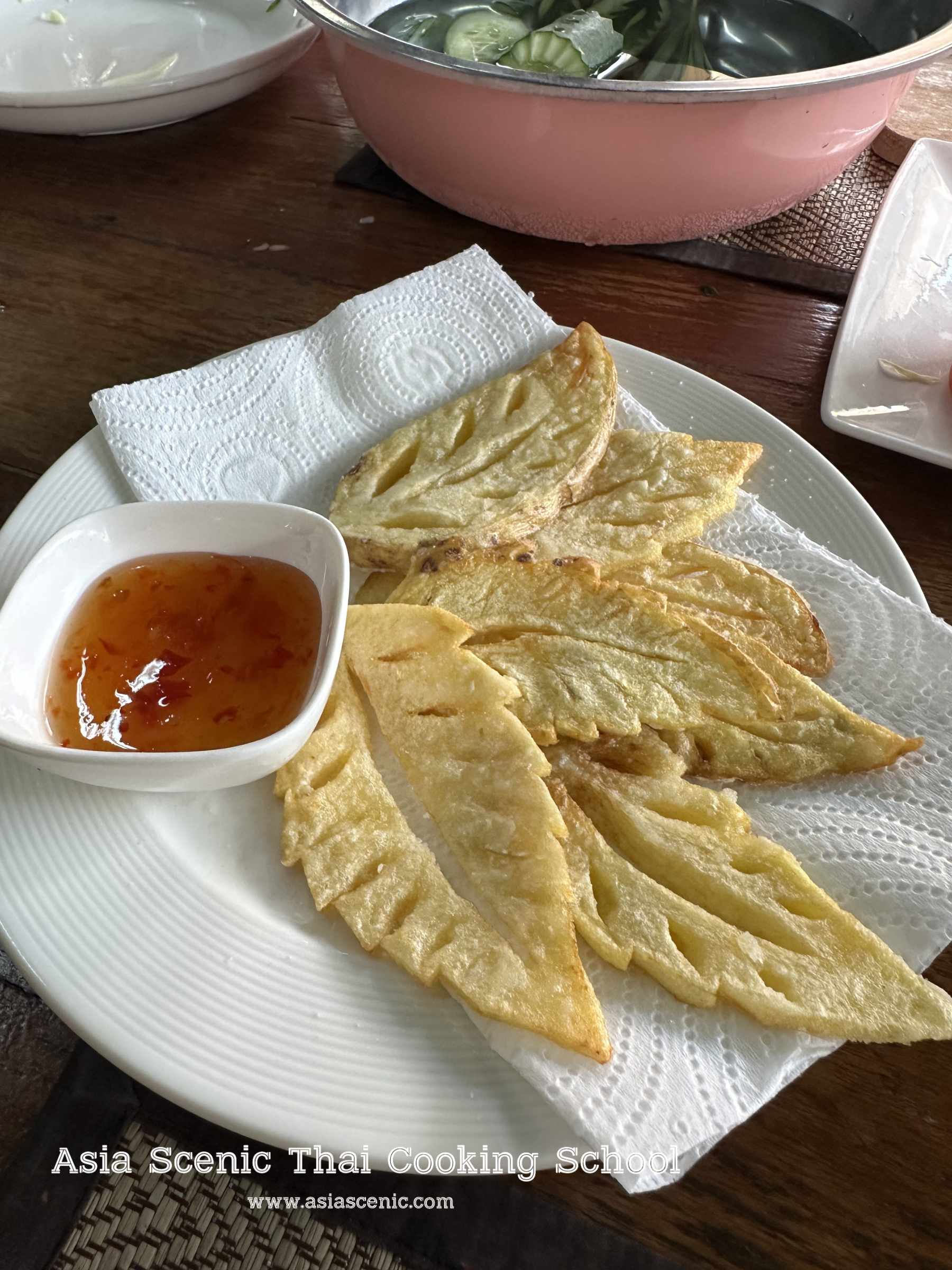
We carve — but we do not waste.
Every piece that is cut away
is kept minimal and intentional.
The goal is to create beauty
without throwing food away.
This reflects the Thai mindset of respecting nature and ingredients.
3. Culture, Not Just Cooking
Thai fruit carving is part of our heritage.
It has been passed down through generations
and used in royal cuisine, festivals, and daily life.
Even in a simple cooking class,
this tradition still lives on.
4. More Than Just a Skill
When students try carving,
they often slow down.
They become more mindful.
More present.
Because carving is not about speed —
it is about intention.
A Small Detail That Changes Everything
In Thai cuisine,
we believe that food should please both the taste and the eyes.
And sometimes,
a small carved detail
can turn a simple dish into a beautiful memory.
???? Contact Only
???? Website: www.asiascenic.com
???? WhatsApp: (+66) 088 261 3428